
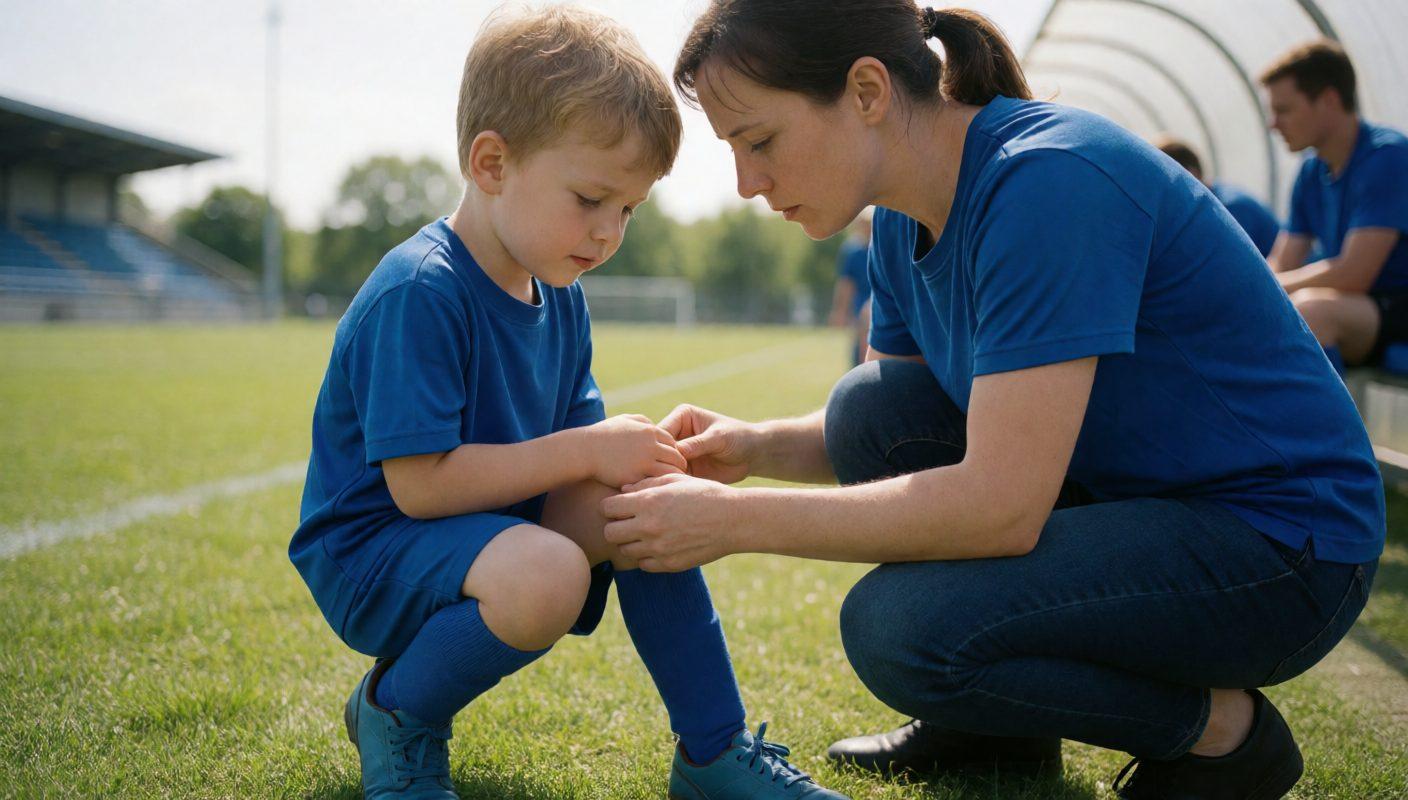
Kids bump, fall and strain themselves all the time, and most scrapes heal fine. But some injuries need a closer look, especially when a child is still growing. Here are the signs parents should notice, the injuries common in young athletes, and when to call a doctor.
Why kids are different
Children are not small adults. Their bones have growth plates, which are areas of soft cartilage near the ends of the bones where growth happens. These plates are weaker than the bone around them and than nearby ligaments.
That means a fall or twist that would cause a sprain in an adult may injure a growth plate in a child. These injuries are important to catch, because they can affect how the bone grows if not treated properly.
Signs of an acute injury
Sudden injuries come from a fall, collision or awkward landing. Watch for:
- Pain that does not settle with a short rest
- Swelling, bruising or a bump that was not there before
- A limb that looks bent or out of place
- Refusing to use an arm or put weight on a leg
- Tenderness when you press right over a bone
- Numbness, tingling or a pale or cool hand or foot
Signs of overuse
Overuse injuries build slowly. They come from repeating the same motion, like throwing, running or jumping, without enough rest. Kids who play one sport year round, or on several teams at once, are more at risk.
Common signs include aching that comes on during activity, pain that gets worse as the season goes on, heel or knee pain after running, elbow or shoulder soreness in throwers, and a child who starts to avoid practice or complains more than usual. Children do not always say they hurt, so changes in behavior count too.
Rest, a lighter schedule and time away from the sport often help. Persistent pain should be checked by a doctor rather than ignored.
One more clue is pain at night or pain that shows up during normal play and not only after a hard session. Heel pain in a runner or pain at the bump just below the kneecap in a jumper are common examples in growing kids. These often respond well to early care, so it pays to speak up sooner rather than later.
Concussion warning signs
Any blow to the head can cause a concussion. Look for headache, dizziness, confusion, nausea, trouble with balance, or acting differently. Remove the child from play right away. Dr. Marisa Formica manages concussions and can guide a safe return to school and sport.
What parents can do
Teach kids to speak up about pain, and let them know it is okay to sit out. Make sure they warm up before play and use fitted helmets, pads, mouthguards and the right shoes. Encourage rest days and time off between seasons.
Try not to push a child to play through pain. Playing hurt can turn a minor injury into a longer one.
If your child has been hurt before, ask the coach to watch for the same problem. Good coaches want to know, and they can adjust drills or playing time. Keep a simple note of when pain started and what makes it better or worse, since that helps the doctor a great deal.
A quick note on home safety
Not all childhood injuries come from sports. Heavy furniture and TVs can tip over when a child climbs or pulls on them. Anchor TVs, dressers and bookcases to the wall with the right straps or brackets, and place TVs on low, stable stands. Keep remotes and toys off the top of furniture so kids are not tempted to climb. A few minutes of work can prevent a serious injury. It is also smart to check playground surfaces and to make sure kids wear helmets for biking, skating and scootering.
When to see an orthopedic doctor
Call 911 or go to the ER if a child has a head injury with vomiting, confusion or drowsiness, a bone poking through the skin, a limb that looks clearly out of place, heavy bleeding, or numbness. See an orthopedic or sports medicine doctor if pain lasts more than a few days, swelling or bruising stays, a child limps or will not use an arm, or pain keeps coming back with sports. Able Orthopedic & Sports Medicine in Forest Hills offers in-office X-ray and care for young athletes. Call (718) 897-2228 or book online.
Common questions
What is a growth plate injury?
It is an injury to the soft area near the end of a child's bone where growth happens. Tenderness over the bone after a fall is a clue, and an X-ray can help.
Can a child have a fracture and still move the limb?
Yes. Some fractures in kids are small, and a child may still use the arm or leg. Ongoing pain and swelling should be checked.
How much rest does an overuse injury need?
It varies. Often a break from the aggravating activity and a slow return works, but a doctor can give a plan if pain continues.
Should kids specialize in one sport early?
Many sports medicine doctors suggest a mix of activities and regular rest to lower overuse risk.
This article is for general education and is not a substitute for a visit with a doctor. If you think you have a medical emergency, call 911.