
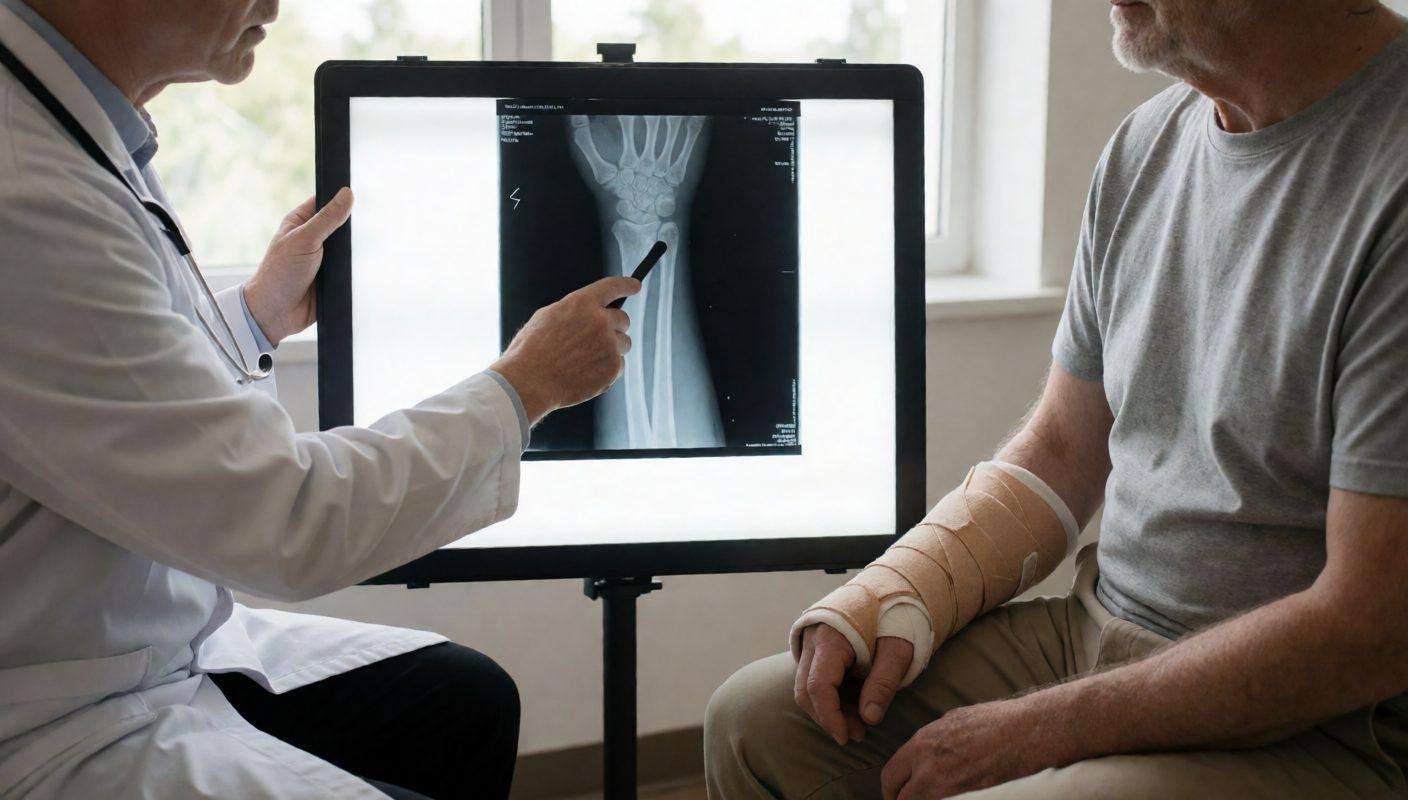
A fracture is simply a break in a bone, but not all breaks are alike. Some are tiny cracks that heal with a boot or cast, while others need surgery to put the bone back in place. Knowing the basic types helps you understand what your doctor is telling you and what recovery may look like.
How doctors describe a fracture
Doctors usually describe a fracture by its pattern, by whether the bone moved out of place, and by whether the skin is open. These details decide how the break is treated.
Most fractures are confirmed with an X-ray. We can take X-rays in our Forest Hills office, so you often get answers during the same visit.
Common types of fractures
Here are the names you are most likely to hear:
- Closed (simple) fracture: the bone is broken but the skin is intact.
- Open (compound) fracture: the bone breaks through the skin, or a deep wound reaches the break. This is an emergency because of the risk of infection.
- Non-displaced fracture: the bone cracks but stays lined up.
- Displaced fracture: the broken pieces have moved out of line.
- Transverse fracture: the break runs straight across the bone.
- Oblique and spiral fractures: the break runs at an angle or twists around the bone, often from a twisting injury.
- Comminuted fracture: the bone breaks into three or more pieces.
- Stress fracture: a small crack from repeated overload, common in runners and athletes.
- Greenstick fracture: a bend and partial break, seen in children whose bones are still soft.
Signs of a fracture
Pain, swelling, bruising and trouble using the area are common. You may hear or feel a snap at the time of injury. A limb that looks bent or out of place is a strong sign of a break.
Not every fracture is dramatic. Some people can still move the hand or walk on the foot, which is why a painful injury that does not improve deserves an X-ray.
Fractures can also be grouped by cause. A traumatic fracture comes from a single injury such as a fall or accident. A stress fracture comes from repeated strain. A fragile-bone fracture can happen with a minor fall when bones are weakened by conditions such as osteoporosis. Knowing the cause helps your doctor choose treatment and decide whether bone health needs attention too.
How fractures are treated
The goals are to line the bone up, hold it steady while it heals, and protect the surrounding joints. The right plan depends on the bone, the pattern and your age and activity level.
Non-surgical treatment is common when the bone is still lined up or can be gently moved back into place. This may include a cast, splint, brace or walking boot, along with rest and follow-up X-rays to make sure the bone is healing in a good position.
Surgery may be needed when the bone is badly displaced, in many pieces, involves a joint surface, or will not stay lined up in a cast. Surgeons commonly use plates, screws, rods or pins to hold the bone steady while it heals. Dr. Mehran Manouel is a board-certified orthopedic surgeon who treats fractures, and he can explain whether surgery is needed in your case.
What recovery looks like
Bone healing takes time. Many fractures need several weeks in a cast or brace, and full strength can take longer. Bones in different parts of the body heal at different speeds, and your own health matters too.
Follow your doctor's instructions about weight bearing and movement. Putting weight on a bone too early, or skipping follow-up visits, can slow healing. Once the bone is stable, gentle movement and strengthening help you get back to normal activity. Stiffness and weakness after a cast are common and usually improve with time and exercise.
Healthy habits support healing. Avoid smoking, eat a balanced diet with enough protein, calcium and vitamin D, and ask your doctor before taking any new medicines or supplements.
When to see an orthopedic doctor
Go to the ER or call 911 if a bone pokes through the skin, a limb looks bent or out of place, a hand or foot is numb, pale, blue or cold, bleeding will not stop, or the injury followed a serious accident or head injury. If you suspect a milder fracture, such as a crack after a fall or ongoing pain that does not improve, see an orthopedic doctor within a day or two. Able Orthopedic & Sports Medicine in Forest Hills offers in-office X-ray and fracture care for patients across Queens. Call (718) 897-2228 or book online.
Common questions
Can a bone be broken and still move?
Yes. Some fractures, especially small cracks and stress fractures, allow limited movement. If pain and swelling continue, get an X-ray.
Do all fractures need surgery?
No. Many heal well with a cast, splint or boot. Surgery is used when the bone is out of position, in many pieces or unlikely to heal properly without support.
How long does a fracture take to heal?
It depends on the bone, the type of break and your health. Your doctor will track healing with follow-up visits and X-rays.
This article is for general education and is not a substitute for a visit with a doctor. If you think you have a medical emergency, call 911.