
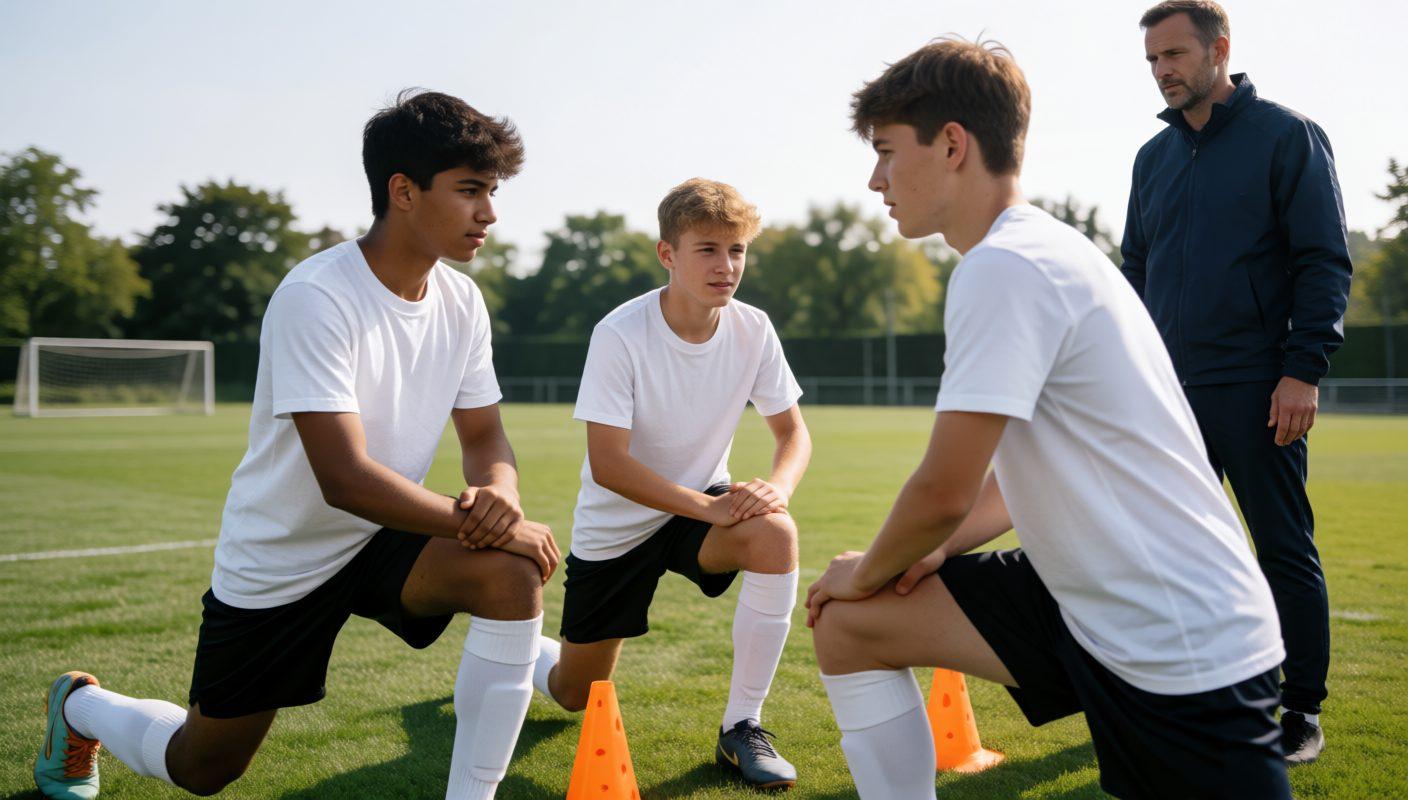
Soccer asks a lot of the legs: sprinting, cutting, kicking and jumping, over and over. Strong, well prepared muscles help the body handle that load. Here is how strength work and a good warm-up can lower the chance of common soccer injuries like hamstring strains, ACL tears and groin pain.
Why strength matters in soccer
Muscles act like shock absorbers. When they are strong and trained to react quickly, they take stress off ligaments and tendons. When they are tired or weak, joints take more of the hit.
Strength training also helps with control. A player who can stay balanced on one leg and land softly is less likely to twist a knee or ankle. No program can promise to prevent every injury, but a steady routine gives your body a better chance.
Consistency matters more than intensity. A short session a couple of times a week, kept up through the whole season, does more than one huge workout followed by weeks off. Players who stop training once games begin often lose the strength they built in the preseason.
Hamstring strains
The hamstrings run along the back of the thigh and work hard during sprinting and kicking. A strain often happens in a sudden burst of speed, and players feel a sharp pull or tightness in the back of the leg.
Strengthening the hamstrings, especially while they lengthen under load, is a common focus for prevention. Exercises like bridges, Romanian deadlifts with light weight and slow leg curls build that strength. Add glute work too, since strong hips take pressure off the hamstrings.
Do not return to sprinting while the muscle still feels tight or weak. A strain that is not fully healed is easy to re-injure.
Protecting the knee and ACL
The ACL is the ligament that keeps the shin from sliding forward under the thigh. In soccer, tears often happen when a player lands, plants and twists, or changes direction without contact.
Many teams use injury prevention programs that combine strength, balance, agility and landing practice. Research on such programs is encouraging, though they cannot guarantee protection. In general terms, they teach players to:
- Land softly with hips and knees bent.
- Keep the knees tracking over the toes instead of collapsing inward.
- Strengthen the quads, hamstrings, glutes and calves together.
- Practice single leg balance and controlled cutting.
Groin pain
Groin strains are common in soccer because of the quick side to side moves and powerful kicking. The inner thigh muscles get overloaded, especially early in a season or after time off.
Hip and core strength helps. Side planks, side lunges and adductor squeezes with a ball are gentle ways to build strength. Increase the load slowly. If groin pain lingers or gets worse with kicking, get it examined, since hip problems can look like a groin strain.
A plain warm-up that works
A good warm-up takes about ten to fifteen minutes. It does not need to be fancy.
- Start with easy jogging to raise your heart rate.
- Add dynamic moves like leg swings, walking lunges, high knees and butt kicks.
- Include a few side shuffles and light jumps.
- Finish with some short, quick sprints that build in speed.
- Save long, held stretches for after the session.
Build up slowly
Many injuries happen when players do too much too soon, like a big jump in training after a break. Plan rest days, and let soreness guide you. Sharp pain is different from the normal ache of a hard workout. Sleep, food and water also matter for recovery. Players who sleep well and eat regular meals tend to feel better on the field and recover faster between games.
Young players still growing should work with proper form and light loads. A coach or trainer who understands youth athletes can help set a safe plan.
When to see an orthopedic doctor
Go to the ER or call 911 if a bone looks out of place, you have severe pain after a collision, or a limb is numb or discolored. See an orthopedic or sports medicine doctor if you feel a pop in the knee, the knee swells or gives way, a pulled muscle shows large bruising, or pain does not improve after a week. Dr. Marisa Formica and Dr. Mehran Manouel at Able Orthopedic & Sports Medicine in Forest Hills care for soccer players of all ages. Call (718) 897-2228 or book online.
Common questions
How often should soccer players strength train?
Two sessions a week is a common starting point for many players, with rest between them. A coach or sports medicine doctor can tailor it to your age and season.
Can strength training prevent all injuries?
No. It can lower risk by preparing muscles and improving control, but contact and bad luck still happen.
Should I stretch before a game?
A dynamic warm-up with movement is usually better before play. Longer held stretches fit better after.
When can I return after a hamstring strain?
When walking, jogging and sprinting are pain free and the leg feels as strong as the other. A doctor can help you decide.
This article is for general education and is not a substitute for a visit with a doctor. If you think you have a medical emergency, call 911.